 The Hat Press Bar: Making a Conference Booth Worth the Line
A case study in experiential design for events, from the first idea to the press on the booth floor
Overview
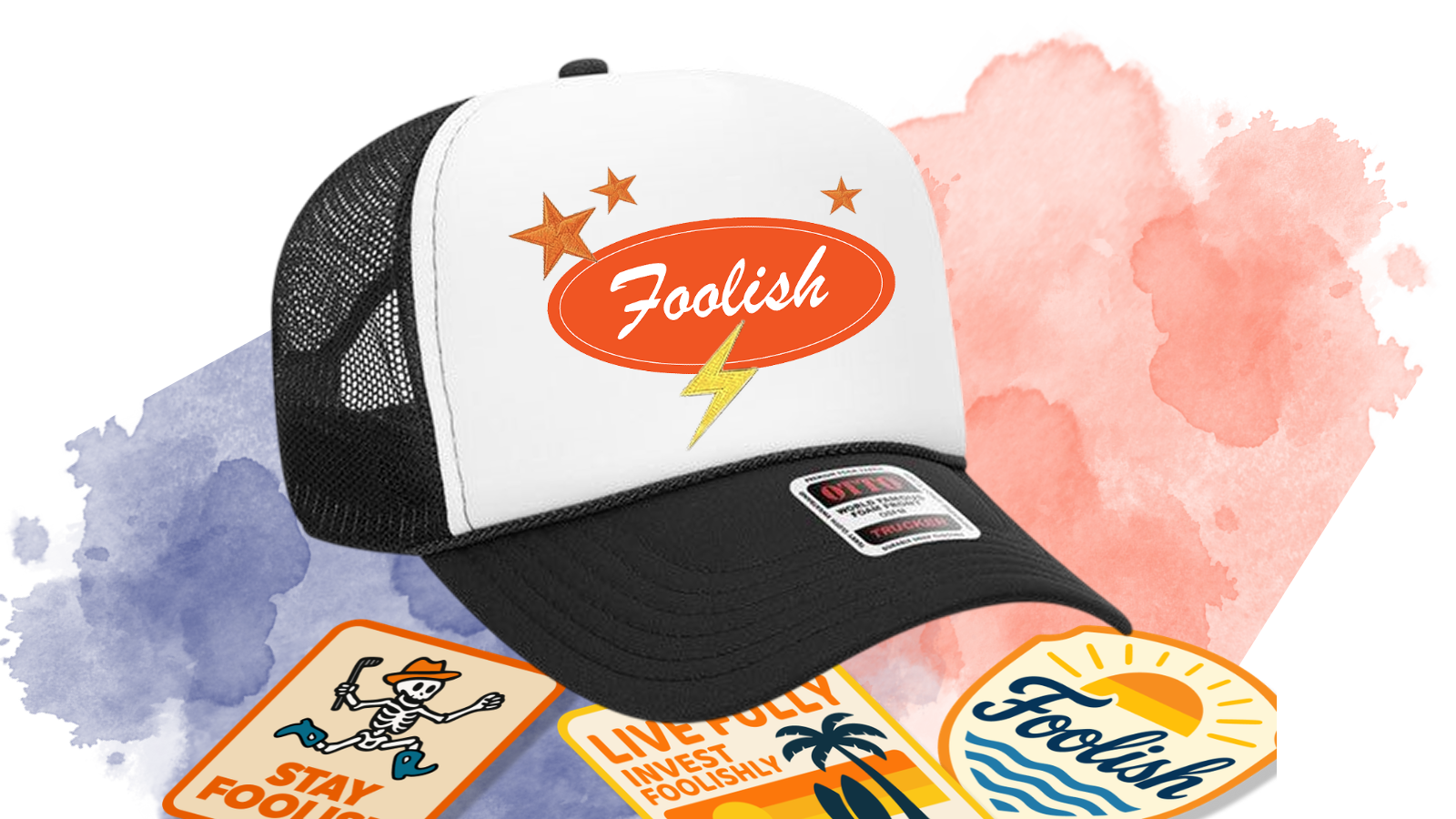
At a financial conference, every booth is after the same few minutes of an advisor's attention, and most of what gets handed out goes into a tote bag and stays there. For the Motley Fool Asset Management booth we built something else: a hat press bar, where a visitor picks a hat and a custom patch, and has one heat-pressed onto the other while they watch.
It was a joint venture from the start. A colleague brought the idea to me, and together we worked out how to make it a real installation: on-the-ground research at craft events, buying the press and equipment, and the logistics of running it at a show. The creative side was mine: designing the custom patches, choosing the hats, and designing the booth to highlight the installation.
Since its first outing at LPL's Focus conference in August 2025 it has run nine times, at six conferences and events from New York to California, and each time it was the buzz of the event, what people were wearing, waiting for, and talking about.
The Idea
A booth brief is usually a list of things: a backdrop, signage, something to give away. A colleague's idea for a hat press bar answered a different question. What would make someone stop, and then stay?
A giveaway handed across a table takes two seconds. A patch pressed to order takes about thirty. For those thirty seconds the visitor is standing at the booth with nothing to do but talk, and the booth team has their full attention. A conference floor rarely offers that.
The second half of the idea was what happened after the visitor left. Most swag fails here. A hat gets worn, so the patch kept working around the show floor for the two or three days the event still had to run.
The patches were how the idea was delivered. The conversation was the point.
Designing Patches People Would Wear
Everything depended on that second half. A patch nobody wears is a patch in a tote bag.
So I designed each set as something an adult would choose to put on, not as a logo to be distributed. Each set was themed two ways, by audience and by place.
By audience, some patches spoke to financial advisors and others to investors more broadly, in language each would recognize: "Keep Compounding" set as a subway sign, "Passive Investor" under a bull asleep in a hammock, "Long Term State of Mind" across a Big Apple skyline.
By place, every event got its own set. New York got a yellow taxi and the subway sign. Huntington Beach got surf and skate. Miami got a flamingo and neon. LPL in San Diego got golf, down to "Sinking Putts, Driving Returns." One character traveled between them: a skeleton under the line "Stay Foolish", who carried a surfboard in California, leaned out of a cab in New York, and swung a golf club at LPL.
Every patch followed a short set of rules:
- Flat and vector-first. Shapes that hold up at patch size and read from across an aisle.
- Mostly no novelty fonts. Type that looks like it belongs on a good hat. Rules are made to be broken, and the drip lettering on "No Bad Waves" broke this one.
- No over-illustration. One idea per patch.
The restraint was not a matter of taste. It was the mechanism. Design quality decided whether a patch got worn, and whether it got worn decided whether the idea worked.
Research and Preparation
An idea like this is mostly logistics, and the logistics were shared. Before the first event my colleague and I researched it on the ground at craft events, then put the pieces in place together. The creative calls inside each piece were mine.
- Hats. I chose the hat styles, since visitors picked the hat as well as the patch. We sourced them and kept the inventory for each event.
- Patches. I designed every patch. We found a patch factory and built the working relationship, from artwork handoff to finished run.
- The press. We bought the heat press and equipment, and worked out the templates and setup materials that made the station repeatable from one event to the next.
- The booth. I designed the booth itself to highlight the installation.
- The calendar. Design and factory work filled the weeks before each show, so patch designs had to be settled well ahead of the event they were themed for.
Running the Bar
On the floor, the work split into three jobs that had to happen at once.
- The press. Each patch pressed live, in front of the person who picked it. The visitor watching it happen was part of the draw.
- The queue. Visitors lined up, and the wait became part of the pitch. The sales and investing teams worked the line, introducing the products while people waited for their turn at the press.
- The booth team. The press was built into how the booth worked. I made the hat and collected each visitor's details at the press, which left everyone else free to have the conversation. Collecting those details was added after the events stopped providing attendee lists to vendors, which made earning that data ourselves the booth's first job.
None of this was a solo act. My colleague and I installed and ran the events together, and it has since become a whole-team effort, with sales and investing on the line and me at the press.
Results
- Nine runs across 2025 and 2026. Six conferences and events, three of them in both years: Future Proof Festival in Huntington Beach, Future Proof Citywide in Miami Beach, Wealth Management Edge in Boca Raton, the Nasdaq party in New York, LPL Financial in San Diego, and FoolFest in National Harbor. LPL in 2025 was the first, and FoolFest in October 2026 the most recent.
- Nonstop lines. At the larger Future Proof events the queue for a hat did not let up, which is not how people usually approach an asset manager's booth.
- 800 to 1,000 custom hats per Future Proof event. Each one put together by a visitor from the hat and the patch they picked.
- A conversation and a contact for every visitor. The sales and investing teams introduced the products to people in line, and each visitor's details were collected at the press. One name per hat, so 800 to 1,000 contacts from each of the larger events, earned at a time when the events no longer handed vendors a list.
- Patches on the floor. The hats were worn around the event, and the bar became the thing people there were talking about.
- It kept coming back. LPL Focus, Future Proof Festival, and FoolFest all had it back for a second year, and it returns in March 2027 at Future Proof Citywide in Miami Beach. That is the plainest measure we have.
What I Carried Forward
If we did it again, I would build in backups sooner: a second factory and a spare press. One late shipment or one failed press on the first morning would take the whole idea down with it, and a good run of events does not change that.
The rest I have kept. Start from what the visitor will do, not from what the booth will hand out. Treat design restraint as part of how the thing works. And do the dull preparation properly, because that is most of what a good idea at an event is made of.