 Building and Elevating a Design Team
A case study in creating a high-performing, collaborative design team aligned with business goals
Overview
In late 2020, The Motley Fool's product development depended on design, but there was no design team. Designers sat in separate departments, each working to a different standard. The company wanted rapid prototyping and had no team built to deliver it. This case covers how the team came to exist: the pitch that created it, the hiring that filled it, and the people systems that made it the happiest team at the company. It predates my current work at Motley Fool Asset Management, and the practices here are the ones I have carried forward since.
The Pitch
Nobody asked me to build a design team. The company asked for something else: faster prototyping. A consultant who had come from Apple had introduced a way of working built on getting to a complete prototype quickly, and the company wanted to mirror it.
The development teams could not deliver that, and for a good reason. They were steeped in proper coding practices, the habits that keep production software reliable. Those habits are right for shipping code. They get in the way when the goal is a prototype, fast. I was leading a product development team myself, so I saw the mismatch up close. That team was already a mix of disciplines: motion graphics, CSS animation, and JavaScript scripting alongside front-end and back-end engineering.
So I took a different proposal to the CTO: a team whose whole focus was getting to the complete prototype, then handing it to developers to build properly. Design, research, and front-end in one group, working to one standard. It would start by hanging off the development team I already led, then stand on its own.
The CTO agreed. That meant giving up the development team I was leading to build something that did not exist yet. This was more than two years before AI became capable of filling that gap.
Hiring, End to End
I ran the hiring myself, from the first draft of a job description to the final decision.
- Defined the roles. Wrote the job descriptions for senior UX designers, product designers, researchers, and front-end developers, aiming for a mix of skills rather than ten versions of the same designer.
- Found the candidates. Partnered with the head of technical recruiting to post in targeted design networks, and promoted the openings through my own.
- Evaluated the work. Created a design exercise so candidates were judged on how they think, not only on a portfolio.
- Made the calls. Which positions to post, who to interview, and who to hire were my decisions.
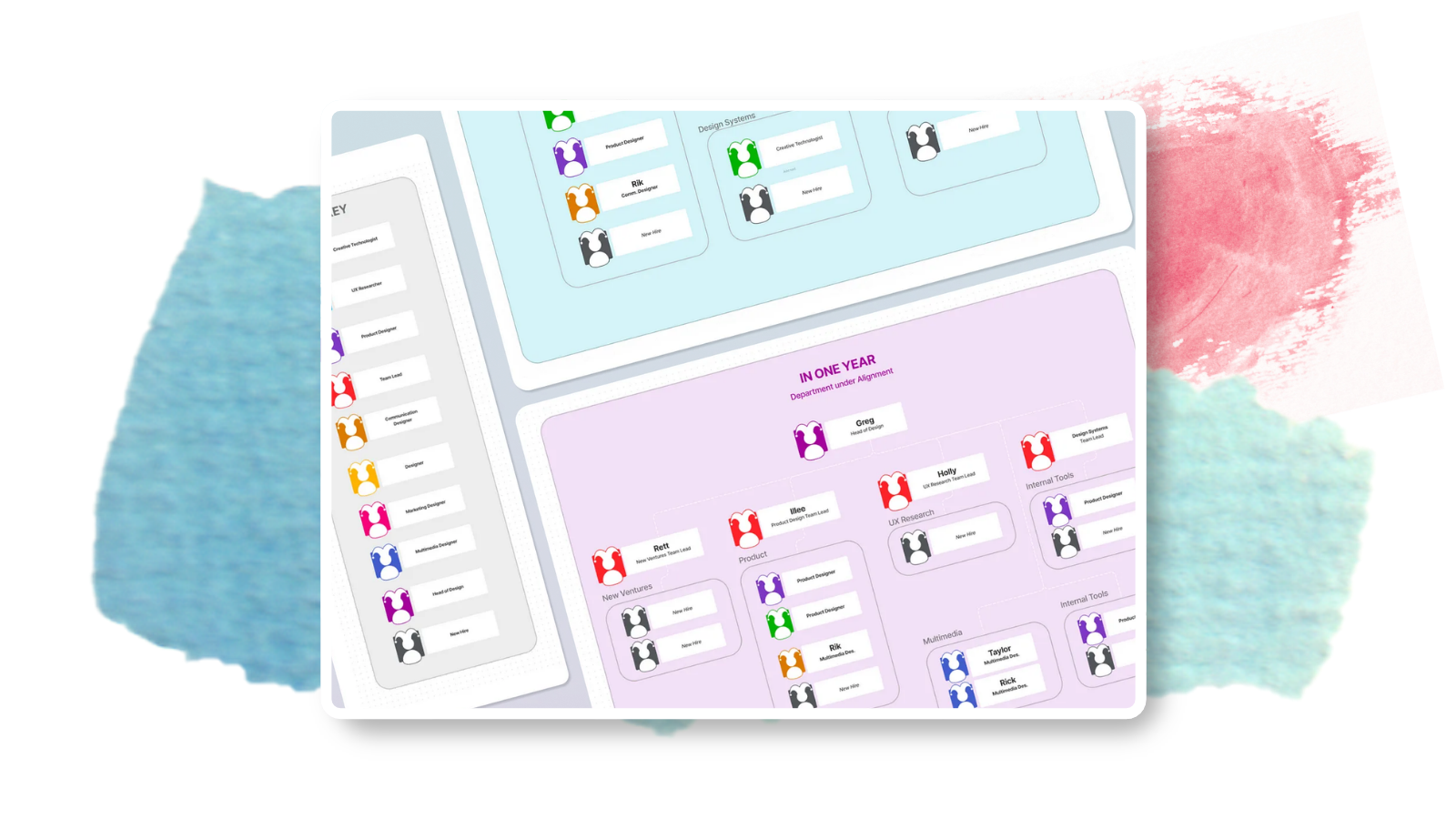
By April 2021 the team stood at 10, counting me, across visual design, UX and research, and front-end development. It came together three ways: two internal transfers, three interns converted to full-time hires, and four outside hires, each chosen from a pool of about 60 qualified applicants.
Onboarding and Embedding
Hiring gets people in the door. It does not make them a team.
I built an onboarding site with what a new hire actually needs: company expectations, the internal vocabulary, early milestones, and who to ask for what. I also set up mentorship for new hires. Each person was then embedded in a product team, while still belonging to design. The model was a horizontal design group delivering across project verticals, so designers had both a product to own and a home to come back to. Regular design reviews and workshops with Product, Engineering, and Marketing kept the work tied to business goals.
I stayed close through the first months to make sure people were acclimated, and I paid attention to where each person was strongest. The goal was a team where everyone was playing to their strengths, not filling an identical slot.
Working Across Creative Disciplines
A complete prototype needs more than design. It needs words, motion, sound, and video, and most of that sat outside my team.
- Motion and animation. The development team the design group grew out of produced the motion graphics, CSS animation, and JavaScript scripting that made prototypes feel finished.
- Audio and video. The audio and video production teams were adjacent to mine. I worked with them as the client, requesting the pieces a prototype needed and pulling what they delivered into the build.
- Copy. The product copywriters worked the same way. I requested the copy, and their words went into the prototypes alongside the design.
The prototypes were where it all came together. Designers, engineers, motion, audio, video, and copy each had their own team and their own standards, and my job was to get their work into one product on a rapid schedule.
From Sketch to Figma
The new team members asked to move from Sketch to Figma. It was their request, not my plan.
They had a good case. The company was calling for rapid prototyping, and Figma offered the speed and consistency to deliver it. I made the switch, and set it up as peer support rather than top-down training, so the whole team got up to speed together.
It became an early signal of how the team would run. Good ideas could come from the newest person in the room, and learning was something we did with each other.
Principles, Standards, and a Shared System
- Design principles. A core group of designers and researchers worked through brainstorming sessions and surveys to define the principles that would guide the team. I took them to the CTO and CEO for approval.
- A shared design system. Built in Storybook and Figma, and used by designers and developers alike, so design and code started from the same components.
- Metrics. Two kinds: business metrics tied to customer engagement and retention, and team metrics from the company's internal surveys.
Helping People Grow
- Career frameworks so each person could see what growth looked like and what the next level required.
- A regular feedback cadence of check-ins and bi-weekly retros.
- Skill programs on tools and working methods, which cut down on handoff problems.
- Time together. Monthly team-building, including virtual games I designed for a team working remote and hybrid.
Results
- 19% above the company average on the internal happiness survey, higher than any other team at the company.
- Shorter feedback cycles and faster turnaround once shared standards were in place.
- Rapid prototyping became routine, which is what the company had been asking for.
- Design earned a seat in strategy, contributing to major work including the reimagined product suite and a custom design system.
- Three interns became full-time hires, and several team members went on to leadership roles.
What I Carried Forward
If I did it again, I would start cross-departmental workshops sooner. Alignment with the rest of the company came, but it could have come faster.
The rest I have kept. Make the case for the team before asking for the headcount. Hire for a range of strengths, then arrange the work so people use them. And when the team tells you what it needs to do better work, as mine did with Figma, the right move is usually to listen and then make it easy for everyone to follow.