 MFAM Brand Video: Keeping a Playful Video on Brand
A case study in directing humor for a serious audience: keeping the jokes on beat and the viewer oriented
Overview
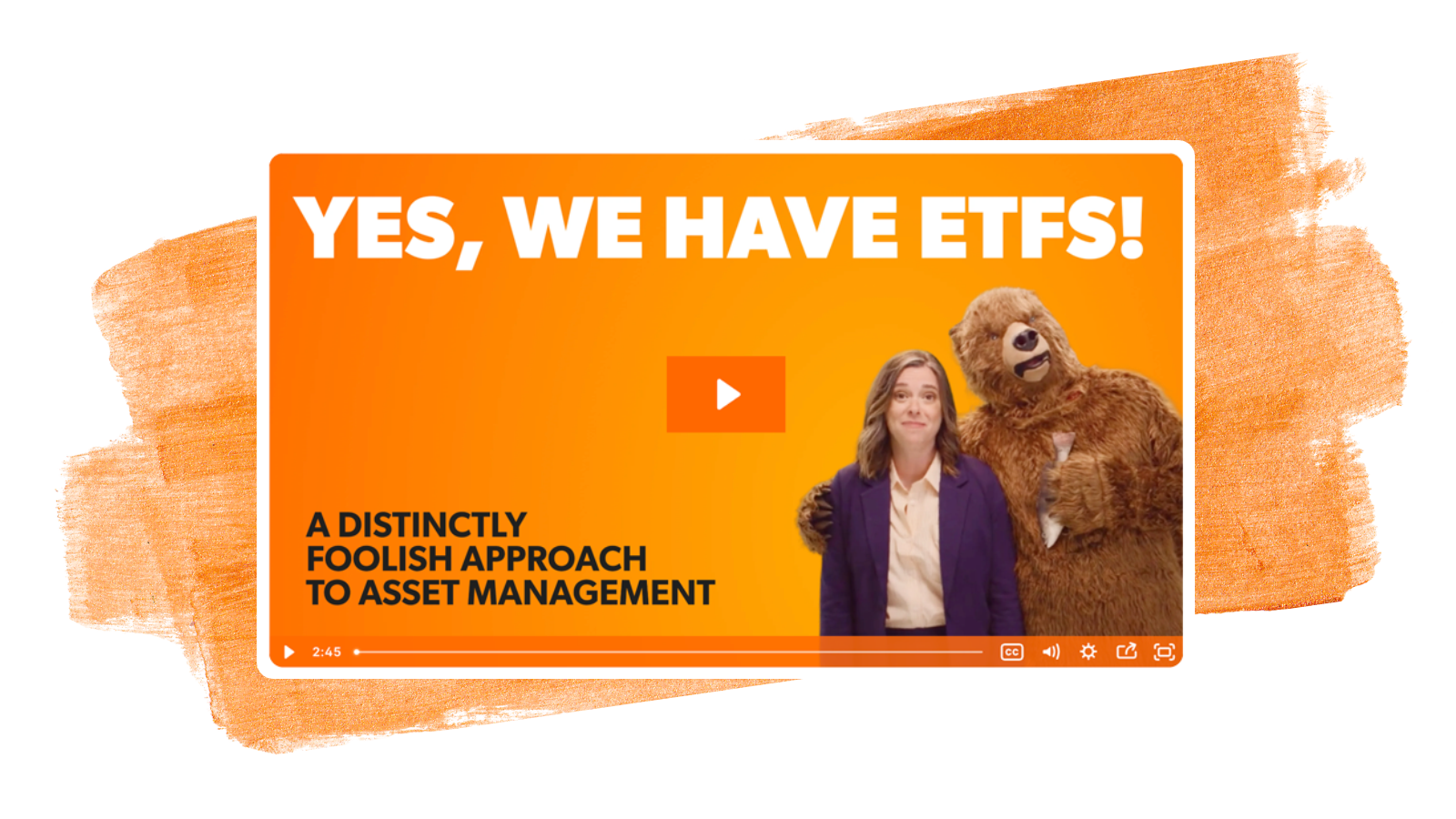
The Motley Fool Asset Management home page carries a brand video with two jobs: build the brand, and tell viewers there is a regulated business behind it that offers ETFs. The audience is financial advisors and investors. The script was direct. The plan to liven it up kept leaning toward the absurd. This case covers my part in it: the script, storyboard, and pacing notes, the point where my influence ran out, and what the results said afterward. The writing, the shoot, and the cutting belonged to others. I was not initially on this project. I was brought in for feedback, and I stayed to keep the humor intact and the audience from getting lost.
A Playful Treatment for a Serious Audience
The brand has room for play. Its voice is airy, and it is built on a history that relished being countercultural. A video that sounded like every other asset manager's would have missed in its own way.
The risk here ran in the other direction. The script, written in-house, read straight. The vision was to punch up the drier lines with gags, and a production company was brought in for the shoot. Each gag was charming on its own. Strung together, they pulled toward the absurd. For advisors and investors, absurd is a short walk from confusing, and confusing is off-putting when the subject is where to put money.
I liked the concept, and I will lean into frivolity more than most people in asset management are supposed to. So my question in every review was never whether the video was too playful. It was whether this viewer would still know what they were watching or still be watching at all.
Notes on Script, Storyboards, and the Edit
- Script. The script was good, though it packed many gags into rapid succession. My edits were about spacing the humor and structuring it to complement the messaging, keeping the piece easy to follow.
- Storyboards. I worked with the production company on the boards. The early ones changed metaphor and motif too many times in quick succession, so the viewer had to get their bearings again with every new scene. A small example: the boards opened on an establishing shot of a toy boat on the water of a map, cut to the character, then cut to a different boat on a different map. I had the second scene return to the first boat and the first map. That continuity gives the viewer something to hold, so they can focus on the message instead of working out why the scenery changed.
- The edit. This is where much of my work went. A joke has beats. I could hear them in the script, and in the cuts coming back I heard them broken. With so many gags, the cut slowed down to give each one its moment, and that broke the flow of the script and forced the humor. One stretch ran a line about stocks going up, then balloons rising, then a line about stocks coming down, then confetti falling. Played in strict sequence, line then gag, the viewer saw each joke coming and the piece slowed down. I pushed to overlap them: run the gag under the line, pick up the pace, and let the visuals complement the speaker and the language instead of waiting their turn.
Where My Influence Stopped
On paper, the final word belonged to our boss, the head of marketing. In practice he deferred to the person who wrote the script, my peer, the head copywriter. The production team had strong, vocal opinions too. There were a lot of creatives and not much room for an editor.
I tested the waters with one larger suggestion: cut a whole element. It was meant to carry over from the previous scene, but it had not been set up well enough for a viewer to see that. There was no appetite for removing an established gag. That told me what feedback would be received.
So I avoided proposing structural fixes and offered smaller, specific changes: the boat, the pacing of the balloons. Those got made, and they are where my notes did the most.
Results
- Three cuts shipped. The production company delivered the video at 90 seconds, two minutes, and two and a half minutes. All three do fine.
- The simplest piece won. The strongest performer was not one of the scripted cuts. It was outtakes of the characters from the shoot dancing freestyle, with a few lines of copy over them.
- That became the pre-roll. That version captured the airiness and counterculture of the brand better than the fuller cuts did, and it has had the longest run as a pre-roll ad unit.
What I Carried Forward
Three things from this project have made me a stronger creative.
- Doing more with less. The version that said the least did the most. That was an unexpected find. Even if every one of my edits had been adopted, the video would not have been as lean and simple as the pre-roll. It was roughly the argument behind the cut I proposed, taken further than I had thought to ask for.
- Keeping the viewer oriented. A playful video for a serious audience is mostly a problem of orientation. Consistent imagery helps. So does timing: a joke that lands on its beat reads as a joke, and one that misses reads as confusion.
- Sizing the note. When a project is not mine to steer, the useful move is to find the size of note that will actually get made, and make those notes count.