 A Compliance-Cleared Brand System for Motley Fool Asset Management
A case study in brand governance that makes the compliant, on-brand choice the fastest one at a regulated asset manager.
Overview
Motley Fool Asset Management (MFAM) manages a lineup of ETFs for individual investors. Every ad, event, deck, and fund page it produces has to be on-brand and compliant before it ships. When I became Head of Brand, Marketing & Product Design in January 2023, my goal was to make that standard easier to meet, not harder: to build a system where the right expression is the default one, so a deliberately lean team could support a fund family that was growing fast.
The Challenge
In regulated financial marketing, consistency and compliance are the same problem. A disclosure in the wrong place, a performance claim in the wrong voice, or an improvised layout is not just a style issue. It is a reputational and regulatory risk. Before the system, each new asset was either bespoke or consistent by convenience rather than by design. As the ETF lineup expanded and high-visibility moments multiplied, that approach could not scale without either slowing the business down or letting the brand drift.
Users & Audience
The system serves two audiences. Internally, it serves MFAM's marketing and sales teams, three partner agencies, up to four contractors, Legal and Compliance reviewers, and, increasingly, AI tools that produce first drafts. Externally, it serves individual investors, institutional investors, RIAs and other professional advisors, and the broader public who encounter the brand in moments like Times Square and Future Proof. All of them should experience one consistent, trustworthy brand, regardless of who made the asset.
Role & Responsibilities
As Head of Brand, Marketing & Product Design at Motley Fool Asset Management, I set the brand and creative direction for MFAM — and, through June 2026, for Motley Fool Wealth Management as well — with compliance sign-off and voice-and-tone standards on every piece. I designed this system, set its rules with Legal and Compliance, and govern it day to day. I am lead contact for the creative teams at three partner agencies (I helped select two), direct up to four contractors, and oversee ~$500K in agency ad creative and $200K–$500K event installations. I also built the AI agents that produce and update on-brand assets, and I remain the human in the loop over all of it.
Scope & Constraints
The system covers every asset type MFAM produces: agency ads, event installations, sales decks, and fund materials; the website; email; social posts and presence; and video for digital displays and YouTube. The constraints are familiar to anyone in regulated marketing. Disclosure requirements vary by asset type and message, review capacity is finite, and the team is lean by design. The system had to deliver the output of a full-time team without one.
The Process
- Defining the rules with Legal and Compliance: I worked directly with Legal and Compliance to set parameters and define approved disclosure language for every asset type and message, so compliance decisions are made once, up front, instead of piece by piece.
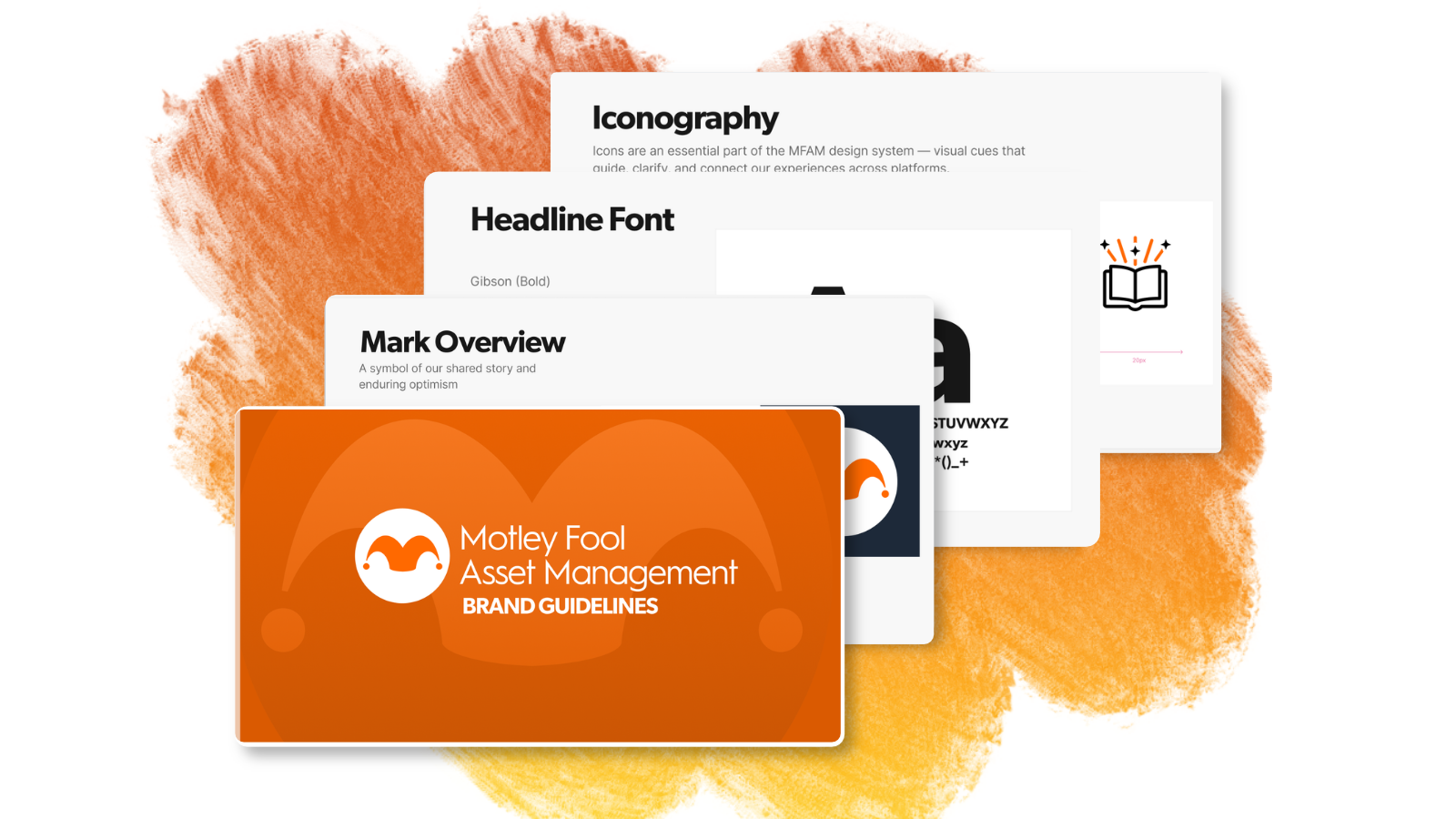
- Building the component library: I turned those decisions into nearly 100 compliance-cleared brand components — from hero layouts and button styles to color palettes, typography and font-face sets, iconography, chart and data-viz templates, fund performance modules, and disclosure blocks — that teams reuse without a new compliance review. I also set up the chart system behind MFAM's pitchbook and fund fact sheets: I chose the chart and layout designs, built the component ecosystem around them, and delivered early versions by hand. Once the ideas were proven and the data was available, I moved the work into templates and tools, including a Figma chart library and Storybook components the team could reuse.
- Governing agencies and contractors: Partner agencies and contractors build from the same library and rules, so every agency ad, event, and deck goes into review with the right disclosures already in place.
- Extending the system with AI agents: I built AI agents that produce and update on-brand assets from the library, instructed with Markdown prompts that encode the system's rules, and checked against the same standards as any other asset, with my review before anything ships.
- Holding the line on escalations: Nearly four years after I moved to MFAM, The Motley Fool's core business still brings me the brand decisions others aren't positioned to make.
Outcomes & Lessons Learned
The system became the linchpin of MFAM's brand consistency, from everyday campaign materials to its most visible moments: ringing the bell at Nasdaq in Times Square, Times Square billboards, Cboe and Nasdaq installations, and custom hat-building at Future Proof in Huntington Beach. It supported the flagship ETF's growth from $400 million to more than $2 billion in AUM in three years, along with the positioning of three factor ETFs launched in 2025. I can’t share formal metrics such as review turnaround, assets produced per quarter, or component reuse, but the pattern is consistent: more gets done, faster. The biggest lesson: governance works by removing decisions rather than adding checkpoints. Settling disclosure and brand questions once, with Compliance at the table, let every downstream team move faster with less risk. But reputational judgment cannot be fully templated. The escalations that still reach me are exactly the cases where judgment matters most, and protecting time for them is part of the design. Looking ahead, the AI agents already handle routine on-brand production and updates. The next step I see is applying the same rules earlier, checking assets against the system before they reach review, so governance gets faster and, where appropriate, automated, and human reviewers spend their time on the calls that need them.
Disclaimer: Confidential details have been omitted or modified to respect the privacy of the organizations involved.